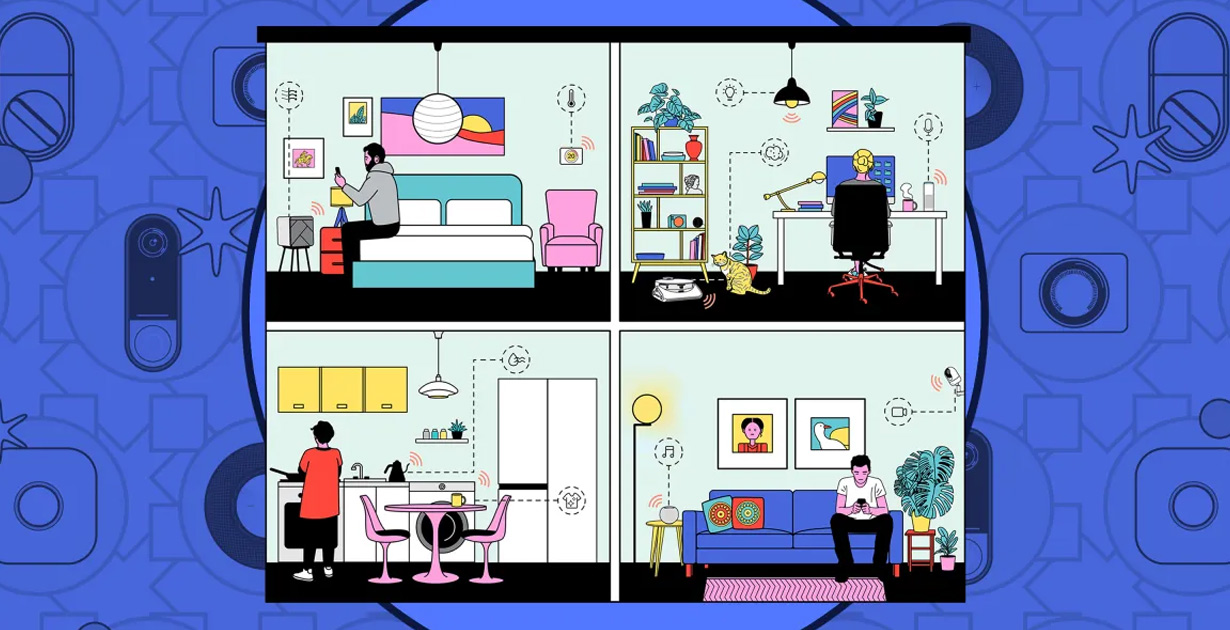
I find the simplest way to explain the concept of a smart home is that it’s a natural evolution of our homes. A smart home isn’t fundamentally different from a “regular” home — it’s just the improvement of one. In the same way that electricity made our homes better and more functional, so is connectivity improving the way we live in and use our homes.
I’ve lived in a smart home for a decade. Every morning at 5AM, the lights in my living room and kitchen turn on, the pet feeder feeds my border terrier, and my security system disarms. Around sunrise, the shades raise, and the thermostat goes from sleep to home mode as the house prepares for its people to get out of bed. Upstairs, the bedside lamps slowly brighten and adjust their warmth to rouse us with some simulated natural light before the alarms on our smart speakers go off.
I dismiss my alarm by tapping it, and my voice assistant reads my calendar appointments for the day and tells me the weather so I can plan what to wear. As I walk into the bathroom, a motion sensor turns the lights on, and — if it’s after 6AM — the smart speaker starts playing the radio for 15 minutes.
I find the simplest way to explain the concept of a smart home is that it’s a natural evolution of our homes. A smart home isn’t fundamentally different from a “regular” home — it’s just the improvement of one. In the same way that electricity made our homes better and more functional, so is connectivity improving the way we live in and use our homes.
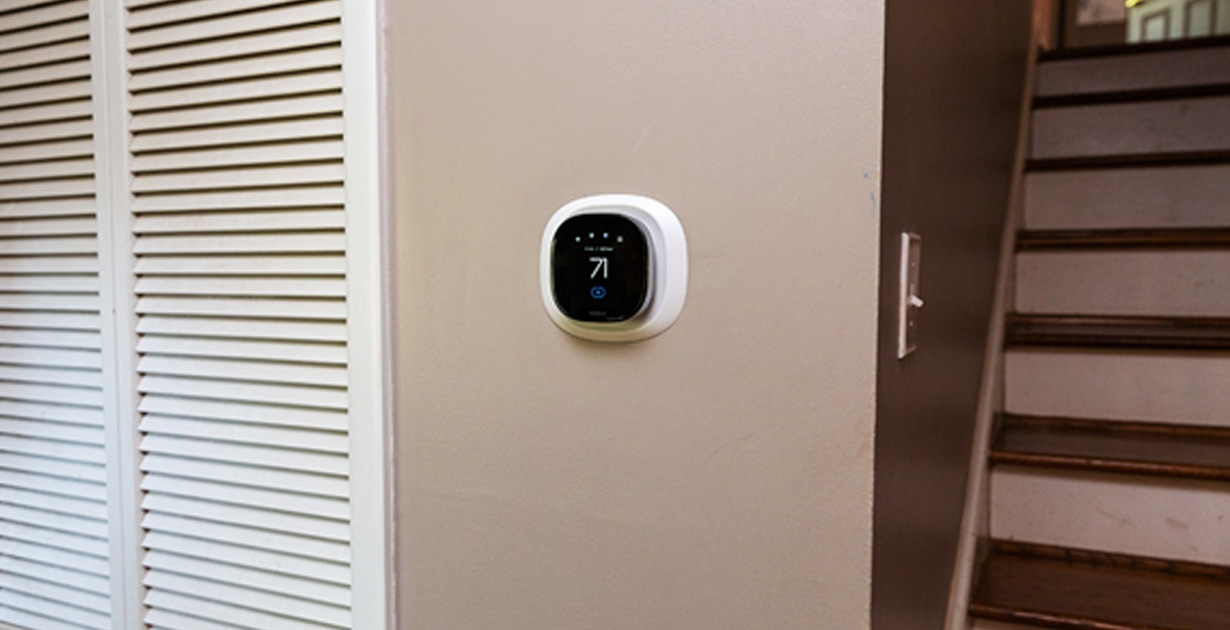
This Ecobee smart thermostat uses sensors to automatically adjust based on where I am in the house as well as the time of day. Photo by Jennifer Pattison Tuohy / The Verge
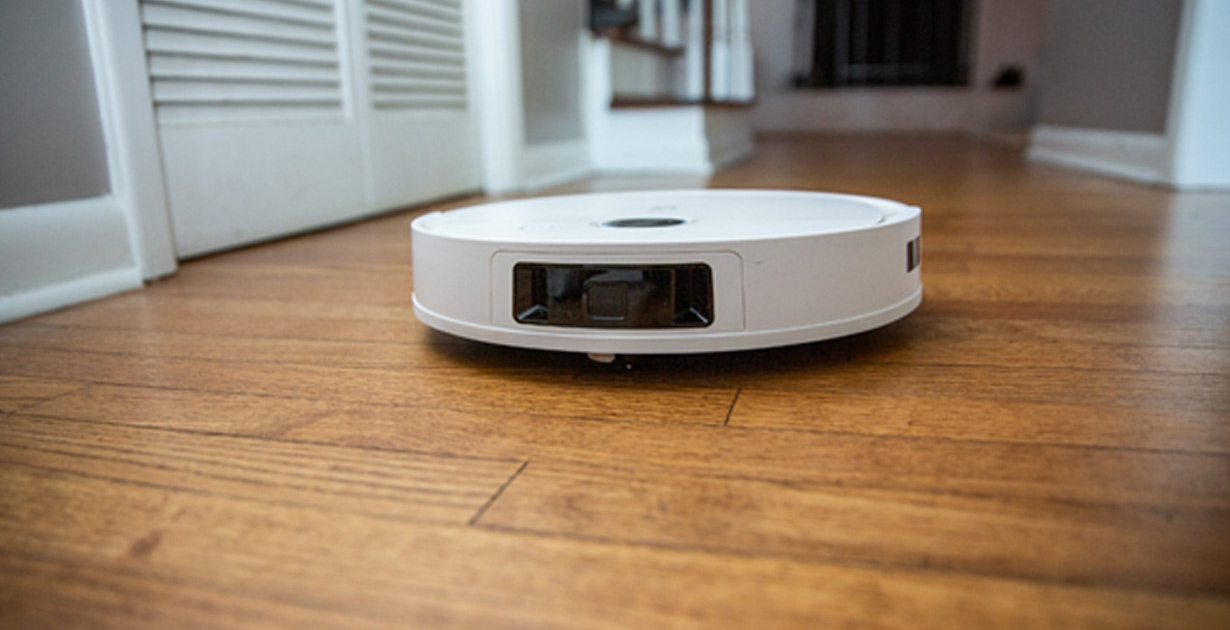
When we leave the house for the morning school run, the door locks behind us, the lights shut off, and the robot vacuum starts its chores. When I arrive home an hour later, the robot returns to its dock and empties itself, the door unlocks as I approach, and the lights turn on.
At 8AM, as I walk upstairs to my home office, the smart thermostat adjusts, and the lights downstairs turn off. In the office, I press a smart button, and the lights switch to daylight mode, the ceiling fan starts whirring, my monitor powers on, an air purifier kicks in, and the smart speaker starts playing music quietly as I begin my workday.
Every action in this morning routine is automated. The lights, locks, thermostat, and other appliances are connected to each other and the internet by wireless protocols that allow these automations to control them. I can also make adjustments at any point via an app on my phone or with a voice command to a smart speaker. All of this is because I live in a smart home.